AI can answer questions. Organizations need work completed.
Today's AI is powerful. It is also unmanaged, so it stays in pilot mode: impressive in demos, kept away from anything that matters. Before autonomous AI touches production, a leader should be able to answer seven questions in seconds; in a regulated industry, it isn't optional. Ungoverned AI answers none of them.
audit query · ungoverned AI
who did the work?no record
why was it allowed?no record
what grounding was used?no record
what changed?no record
what evidence exists?no record
what did it cost?unknown
can you trust it?unverifiable
Who did the work?
+
Every action on the authoritative work graph names its actor: the worker, the persona role it ran under, and the model behind it. In the production run, orchestration, development, and QA each ran on a different model, with every action attributed. Nothing executes anonymously.
Before anything runs, the Work Order Compiler derives an execution contract: allowed scope, allowed roots, forbidden paths, tools, and authority. Once compiled, the work order is the authority for execution; workers act inside it, never past it. Authority is declared before the work, not reconstructed after it.
No worker starts cold. FAFO™ Memory onboards each task with a grounding bundle before the worker acts: the code, prior decisions, and the references the work depends on. Results are cited from what the organization already knows, not improvised by the model.
Every change of state, scope, authority, or acceptance is an explicit, recorded transition on the authoritative work graph. The graph is always in a known, auditable state, never a guess about what happened.
Completion is derived from evidence, never from an agent's claim that it's done. An evidence bundle is attached to the work and must satisfy the acceptance contract before anything closes. Every capability claim is backed by an artifact with reproducible commands.
Cost is recorded per action and rolled up by phase, role, model, and work order. The production run: 11,193 priced model calls, 3.197B tokens, $1,990.52 actual spend against a $10,603 uncached equivalent. The cost of work, broken out, down to the action.
Trust is verified. QA runs adversarial review, and an independent gatekeeper checks the evidence against the acceptance contract before close. The answer to "is it done?" is a hard yes backed by artifacts.
AgentOS answers all seven in seconds. For any unit of work, anytime. If you can't, you're shipping on faith.
Validated in production
Governed autonomous work, validated in production.
Validated today in software engineering. Designed for governed work everywhere. Multi-agent teams completing real work, attributed by phase, role, model, and token, down to the action.
The engineering term arrives second: per-action cost attribution.
production ledger · a real work order, attributed to the penny
priced model calls11,193
tokens3.197B
actual spend$1,990.52
uncached equivalent$10,603
cache hit rate94.5%
Work phase
Primary model
Tokens
Cache reuse
Cost
QA
Codex GPT-5.5
201M
92%
~$227
Development
Claude Sonnet 4.6
450M
97%
~$210
Orchestration
Claude Opus 4.8
208M
97%
~$143
Review
Codex GPT-5.5
38M
89%
~$55
Architecture
Claude Opus 4.8
53M
96%
~$46
Gatekeeping
Codex GPT-5.5
22M
91%
~$36
Planning
Claude Opus 4.8
26M
97%
~$22
Every dollar traces to the phase, role, model, and action that spent it, where most platforms can only report a monthly total.
The authoritative work graph
The system of record, rendered.
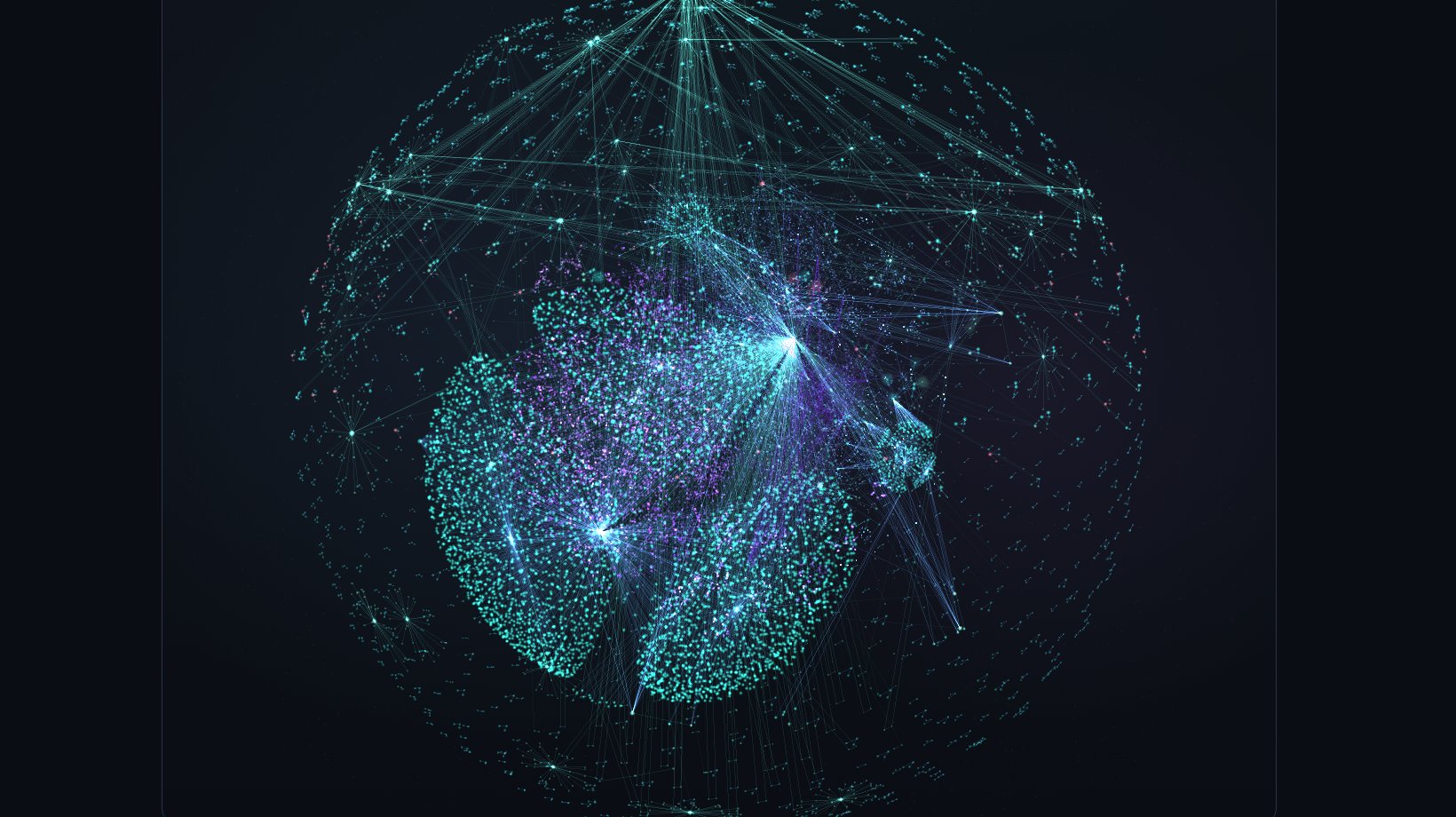
No black box. Every work order, worker, transition, evidence reference, cost record, and grounding event lands in one governed graph. Inspect every decision every agent made. This replay renders the real graph behind AgentOS.
Interactive · real counts and structure · anonymized names and dates
Why this happens
The bottleneck isn't intelligence, it's trust in production.
Models became intelligent years ago. But unmanaged output means a senior engineer babysits every step, and the productivity gain dies there. Work you can trust takes more than intelligence, and organizations already know exactly what it takes: the same accountability every human team runs on.
Accountable human teams
Assigned work → Budgets → Independent review → Audit trail
AgentOS, for autonomous work
Work orders → Budgets → Independent QA → Evidence → Work graph
Safe production work is the outcome. Trust is what lets you delegate it. Governed execution is how AgentOS makes that possible.
Trust requires governed execution. → Governed autonomous work requires an operating system.
The combination
The power is in the combination.
Each mechanism removes a reason to keep AI out of production. Tap any card to see how it actually works.
Every other system answers
"How do I get an AI to do work?"
AgentOS answers
"How do I run AI workers like an auditable organization?"
Work ordersEvery AI action follows an approval process before affecting production.Authority is declared before the work, not reconstructed after it.
The operator never hands an agent raw freedom. Before anything runs, the Work Order Compiler derives an execution contract from the conversation: allowed scope, allowed roots, forbidden paths, permitted tools, and the authority the worker acts under. Once compiled, the work order is the authority for execution. Workers act inside it, never past it.
The full lifecycle is governed end to end: scope, work order, contracts, acceptance, execution, QA, governance, close. Work that would cross a contract boundary, such as authority or budget, stops and escalates instead of proceeding, so the blast radius of any worker is bounded before it acts.
Pre-run authority, declared not reconstructedBounded blast radius per contract
The compilerYou describe the outcome. The system designs the workforce.The operator never manually composes the execution system.
The conversation is the planning phase. From it, the Work Order Compiler compiles both halves of a governed execution system at once: the execution side (the workforce, the task graph, the grounding, the routing) and the governance side (the contracts, the budgets, the review chain, the evidence requirements, the recovery topology).
The work order is the source program; the governed execution system is the compiled program. That is why governance here is automatic rather than layered on afterward: it is emitted by the same compilation that creates the workers. The operator defines intent. AgentOS derives execution.
Conversation in two systems outGovernance emitted, not added
AutonomyYou define the goal once. AgentOS owns execution until completion.It raises only the decisions that need your judgment.
Autonomy here does not mean unsupervised. It means the operator stops directing individual steps. The goal is defined once, and AgentOS advances the work through its governed state machine until the acceptance criteria are met.
The only interruptions are the ones that genuinely require operator judgment: real ambiguity in the work, or a contract boundary such as authority or budget. Everything else proceeds, is evidenced, and is verified without a human in the loop.
One goal defined onceEscalation by contract, not by habit
EvidenceEvery completed job includes proof showing exactly what happened.Nothing closes without proof.
Completion is a property of evidence, not of an agent's confidence. As work executes, an evidence bundle accumulates against the acceptance contract: what ran, what changed, what was produced, and what verified it. Nothing closes without satisfying that contract.
The proof is not a log dump. Evidence packets are structured artifacts on disk with reproducible commands, and an independent gatekeeper checks them against the acceptance contract before close. Every capability claim on this site is backed by one.
evidence packet · on disk
ONE WORK ORDER · ON DISK

  workorder/                  3 files     the signed contract
  dispatch_design/            4 files     architect plan
  dispatch_work_packages/    78 files     task packets handed to devs
  gate_evidence/<task>/   4–38 files     evidence per task (×11 tasks)
  gate_evidence/generated/  8,438 files     auto-checksummed verdicts
  grounding/                152 files     per-role resume overlays
  observations/               4 files     banked decisions + discoveries
  standdown/checkpoint/       1 file      RESUME packet
  gatekeeper_workspace/    ~48k files     live gatekeeper state + transport
Artifacts on disk, reproducibleIndependent gatekeeper before close
Audit trailInspect every decision every agent made.A real system of record, rendered.
The authoritative work graph is the system of record for everything: 26,866 governed objects and 36,515 recorded transitions in the production estate, every one naming its actor, its authority source, and its evidence. Every change of state, scope, authority, or acceptance is an explicit transition; the graph is always in a known, auditable state, never a guess about what happened.
It is not an internal abstraction. The graph renders, and you can replay real production work through it: who did what, grounded by which knowledge, at what cost, verified by whom.
26,866 governed objects36,515 recorded transitions
Spend controlEvery dollar of AI spend is attributed to the work that spent it.Budgets are part of the contract, not a bill at month end.
Cost is recorded per action as work executes, then rolled up by phase, role, model, and work order. The production canon run: 11,193 priced model calls, 3.197 billion tokens, $1,990.52 of actual spend against a $10,603 uncached equivalent, at a 94.5% cache hit rate.
Budgets are declared in the execution contract and enforced during the run, not reconciled after it. Planning, architecture, development, QA, review, and governance each carry their own attributed cost, down to the action that spent it.
GroundingNo worker starts cold.Results are cited from what the organization already knows.
Before a worker acts, FAFO™ Memory onboards the task with a grounding bundle: the relevant code from a 674,025-edge symbol graph, prior decisions, and the references the work depends on. Results are cited from what the organization already knows, not improvised by the model.
The memory compounds. 289,304 observations from past work are retrievable across the fleet, so nothing is rediscovered twice, and every retrieval is recorded on the work graph as part of the grounding record for the task it served.
674,025 code edges in the symbol graph289,304 observations for reuse
ContinuationThe work survives the worker.Fragile sessions never hold the state.
No model, agent, session, or host ever holds the state. Authority, progress, evidence, and routing live on the authoritative work graph outside every runtime, so workers, containers, and even models are disposable.
When a worker dies, and workers always die, another worker resumes from the graph deterministically in under 5 seconds, with nothing lost and nothing duplicated. Continuation, not reconstruction: there is nothing to rebuild, because the work state already exists outside the runtime.
Model independenceNo model, provider, or price change can strand the organization.Providers are workers, not the system.
State is not the model. Authority, evidence, and work exist outside every provider, and models are routed per task: in the canon run, orchestration ran on Claude Opus 4.8, development on Claude Sonnet 4.6, and QA, review, and gatekeeping on Codex GPT-5.5.
Frontier models are deprecated, repriced, and retired without notice. If a model is no longer available, your organization is not: the next model picks up the same work order with the authority, evidence, and history intact. Local and frontier models are interchangeable execution resources under the same governance and the same cost ledger. The organization survives the model.
Routed per task, local + frontierOne ledger for every provider
Each system has one clear job and one clear boundary. That separation is what keeps it replaceable: swap the memory layer, or run the fabric in front of another swarm, without touching governance. Open any one to dig in.
Governs the work
AgentOS
Authority, evidence, recovery, and economics built into every unit of work. The operating system you are reading about.
A chatbot returns an answer and hands the work, the proof, and the accountability back to you. AgentOS carries a request all the way to a completed, evidence-backed deliverable.
Conversational AI
Question → Answer → Done
Produces answers. The work, the proof, and the accountability are left to you.
AgentOS · governed execution
Compiled Work Order → Execution → Evidence → Review → Completion
Produces completed work, with the authority, evidence, and acceptance built in.
The operator defines intent. AgentOS derives execution. The work order is the source program; the governed execution system is the compiled program.
You describe
Conversation
→
Derives
The Work Order Compiler
→
Produces
Governed Execution System
The compiler produces a system, not just a work order. The execution path below shows the compiled system running.
The output is completed work: evidenced, reviewed, closed.
AI agent frameworks and orchestration tools: Claude Code · OpenAI Agents · CrewAI · LangGraph
Those systems execute work. AgentOS governs it.
Workers perform the work. AgentOS determines what work is allowed, how completion is proven, what it cost, and how the work continues when a worker dies.
Most agent systems run a loop and hope it converges. AgentOS advances a governed state machine, which is what makes governance, economics, recovery, and completion possible in the first place.
Most agent systems
Observe → Think → Act → Repeat
AgentOS
State → Transition → Evidence → Verification → Next State
Every transition is recorded, evidenced, and verified. → Cost, recovery, and completion fall out of the model.
Most platforms provide one of these.
Autonomous workforceGovernance engineEconomic control planeWork continuationMemory systemInference layer
AgentOS runs all six as one governed work system.
The organization survives the model.
State survivesAuthority survivesEvidence survivesWork survives
The model is replaceable.
Most AI systems
Conversation = State
AgentOS
State ≠ Model
Claude dies↓work survives
OpenAI dies↓work survives
The session dies↓work survives
The host dies↓work survives
No model, agent, session, or host carries the state. The work does.
Resume from durable state
Authority and progress live in an authoritative work graph, not a chat window. Execution picks up exactly where it left off.
Rebuild the team
A dead Claude, Codex, or session is replaced. Workers are temporary; the work system is permanent.
Continue execution
Crash, kill, or restart, with no operator intervention. Work continues from the authoritative work graph, never lost and never duplicated.
Sovereign by default
You decide what leaves your perimeter.
The platform, your code, your weights, and the local model tier run inside your perimeter, from a single workstation to a multi-host GPU fleet. Frontier models are optional and governed: AgentOS controls what work is allowed to reach an external model, and attributes every token either way. No hosted source-code custody at any tier. If you answer to regulators, in finance, healthcare, insurance, or government, this is the difference between a pilot and a production deployment.
Tier 01
Developer
A single developer on a single machine. Local database, local Git, a small local model, an optional frontier key on the side. Zero cloud dependency by default, ideal for pilots and regulated solo work.
Tier 02
Team
A shared internal runtime for a team or product unit: shared database, shared inference, shared memory, one persona and tool catalog. Where most organizations land for their first production deployment.
Tier 03
Fleet
A full self-hosted swarm across a multi-host GPU pool, with cross-team dashboards and budget-bounded provisioning across any cloud, your LAN, or your own data center, with zero inbound ports.
Where it fits
One security review.
Adjacent to all. Replaces none. Composes with all.
AgentOS sits underneath the tools you already run, not against them. Keep Claude Code and Cursor in the editor. Call a frontier agent from inside it. A LangGraph or CrewAI workflow becomes a governed execution contract; a framework persona becomes a governed worker with a scoped tool policy. It adds authority, evidence, and cost, and asks you to rip out nothing.
Claude CodeCursorDevinLangGraphCrewAI
Multiple control planes → one governed stack
Governance, a memory layer, fleet-scale inference, GPU vector search, and budget-bounded provisioning each are someone else's whole product elsewhere. Here they arrive as one self-hosted stack, with one cost ledger, one security review, and one runbook. Local and frontier spend land in the same ledger, attributed per task.
Beyond software
Any kind of work.
Software engineering is where we prove it. But the model, work order, roles, contracts, evidence, review, completion, cost, is about work, not code. The work changes from domain to domain; you define the governance once, in your terms, and it carries to every domain you point it at.
Engineering
build → ship → review → close
Marketing
campaign → content → review → publish
Legal
contract → review → amendment → approval
Operations
investigate → remediate → verify
Accounting
close → audit → correction
Compliance
assess → review → attest
The work changes. Your governance carries. → Governed autonomous work, in any domain.
Engineering evidence
An AI saying it's finished isn't proof.
Inspect the proof.
Every capability on this site is backed by an artifact: real numbers from real work orders, with reproducible commands.
Governs the workRemembers the workExecutes the work
Trust isn't a prompt. It's a process.
AI workers, under governance.
We're onboarding a limited number of teams putting governed autonomous work into production. If you're putting AI in charge of real work, let's get you running.
Stop piloting AI. Start managing it.
Thanks. Your request is in. We read every one personally and will be in touch as onboarding slots open.
We'll only use this to talk about getting you AgentOS. · FAFO™ · letsfafo.com
We use cookies for analytics to understand how the site is used. Accept to allow this, or reject to keep them off. See our Privacy Policy.
 FAFO™ is a member of the NVIDIA Inception Program.